
Café Writers Competition is now closed.
Competition Winners 2025
We are proud to announce the results of the 2025 Café Writers Poetry Competition followed by a report from judge Jessica Mookherjee
First Prize goes to Lesley Saunders
King Priam of Kharkiv
An old man, frail, deaf and nearly sightless,
a long way past his prime though ignorant
of war till now, gets quietly out of bed.
He hasn’t slept all night, like all the other nights
since it happened. His wife lies exhausted,
dozing between the nightmare they now share.
He goes slowly to the window, stares out
through the smoky darkness, nothing left
to think about, the sky already turning to fire.
Coat, outdoor shoes, walking stick; open, close
the door without a sound; involuntary shiver
in the dawn chill; crouch across the short stretch
of no-man’s land, past the wire, over the ditch –
and there it is, the camp, the man he must find
the words to talk to, ask the impossible, beg
for his son’s desecrated corpse to be returned.
Tears crawl down his cheek for the shame of it.
He’ll stop here, lean against the wire fence
while he retches. He’ll think, only a father
can do this. This is the only thing a father can do.
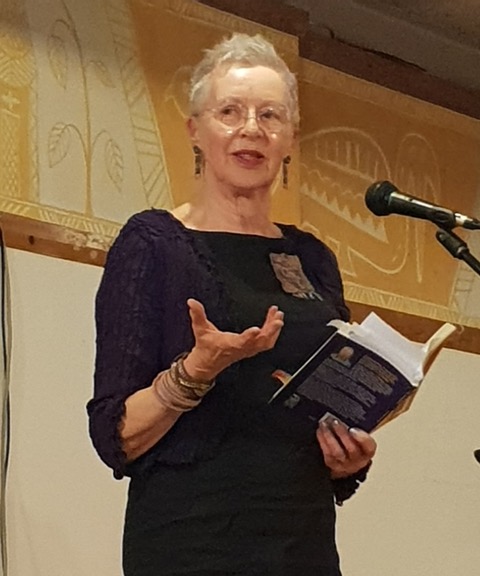
Lesley Saunders is the author of several poetry collections, most recently This Thing of Blood & Love (Two Rivers Press 2022) and, with the artist Rebecca Swainston, Days of Wonder (Hippocrates Press 2021), a poetic record of the first year of the Covid pandemic. Her previous collection, Nominy-Dominy (Two Rivers Press 2018) explored the ways in which the ancient stories of Greece and Rome continue to inhabit our imaginations, how they seem to speak to modern catastrophes.
Second Prize goes to Rency Raquid
Essay on The Snail
after Paul Muldoon
It’s known that on the Sixth Day
God created the beasts that walk
the earth. This includes The Snail
although some say The Snail rose
on the Fifth with The Fish.
This is why it seems to hover –
its true nature is to swim
with its soft-bodied cousins.
Just look at its shell. Most people
find this alternate theory silly.
They argue its shell was stolen
from the shore, its ectoplasmic
body sealing the lip shut, mucilage
muffling the waves, no song
will ever escape. A proof of its
non-marine origin is how it hates the sea.
To demonstrate, a man picked one up
against its will and sprinkled salt
on its underside. Spectators
took exhaustive notes as it writhed,
bubbled, and died. No one from
The Snail community filed a case
on this slaughter. The Snail does
not debate nor conern itself
with humankind’s many desires.
It only wishes to be left alone
to perform its anointed tasks: to lick
every surface of earth, mark all
the places it goes to, and after
its short life report to God
if it’s still any good.
Rency Raquid is a DPhil student at Oxford, studying plant development and evolution. His poems have won the 2024 Ware Sonnet Prize, placed third in the 2023 National Poetry Competition, and been shortlisted for the Winchester, Troubadour International, and Free Verse Poetry Prizes. He volunteers at the Oxford Poetry Library.
Third Prize goes to Vanessa Lampert
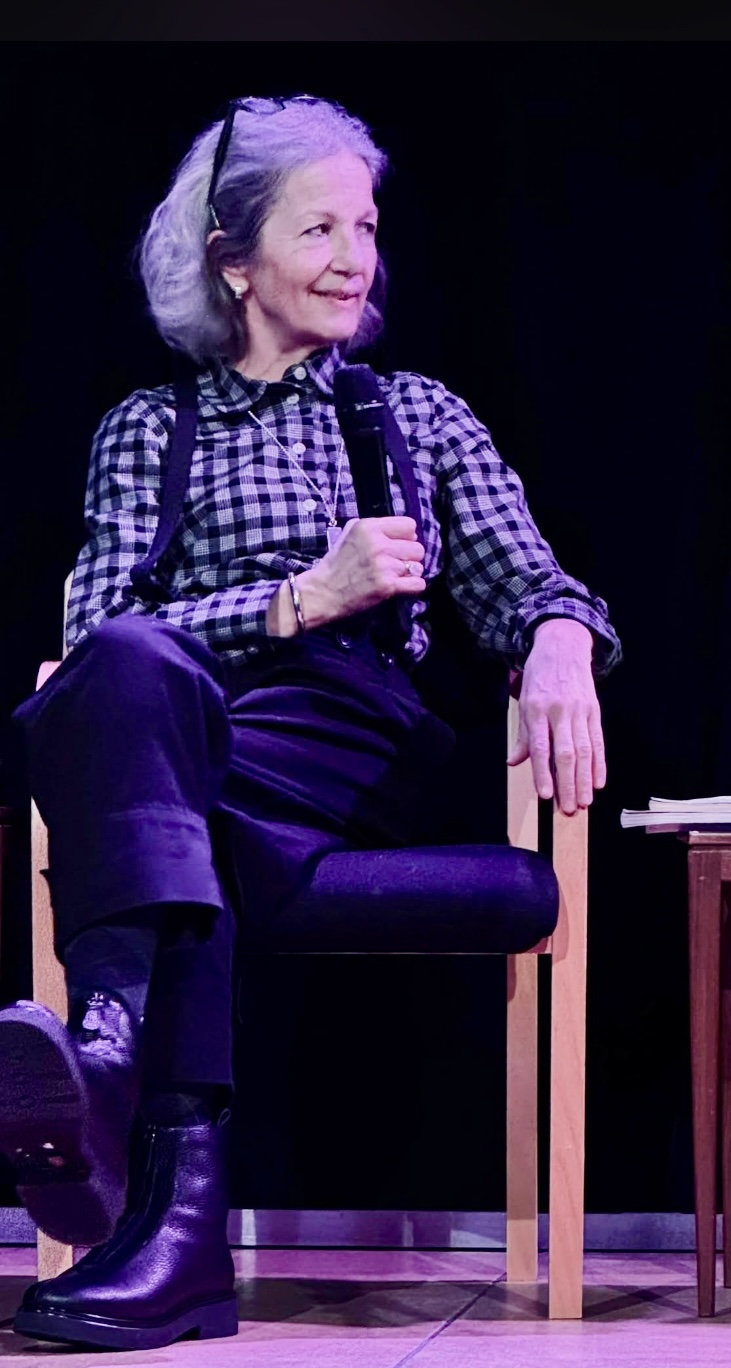
Vanessa Lampert is a writer, mentor, editor and teacher of poetry. Her work is widely published. She runs workshops nationwide for adults and in schools and volunteers at Oxford Poetry Library. She was a co-founder of The Alchemy Spoon magazine and is a committee member for Poetry in Aldeburgh.
Vanessa has won the Café Writers, Edward Thomas, Ashdown Forest and Sentinel prizes and the Ver Poetry prize (twice). She has been placed in many others including commendations in the Troubadour, Magma, Bridport, Verve, and National Competitions. Vanessa’s pamphlet On Long Loan was published by Live Canon in 2020, and her collection Say It With Me was published by Seren in 2023. She has recently edited a collection of poems on a theme of wellbeing for Candlestick Press.
The Norfolk Prize goes to John Vaughan
THE PARTY
It was Bill and Petra’s party; lots of people there.
There were at least two King Henry V111’s, one
Queen Victoria and the hunchback was I assume
a rather irritable Richard 111. My partner was
Maid Marian – her choice. But that was Ok –
I wasn’t going as her Robin.
I was a Preacher – Man, straight out of a Western
starring John Wayne. I had the hat, dog collar, bible
in hand and a dark suit. I wore a war-weary face
regretting the guns and bloodshed. Of course
there was nothing I nor God could do about it.
Life was cheap on the prairie.
During the evening I spoke to Albert Einstein,
Winston Churchill and Gina Lollobrigida twice.
Good evening, good food, good wine and conversation.
I moseyed on home. Maid Marian came back the next day.
She said she had got lost and had spent the night
in Sherwood Forest. ‘It happens,’ I said.
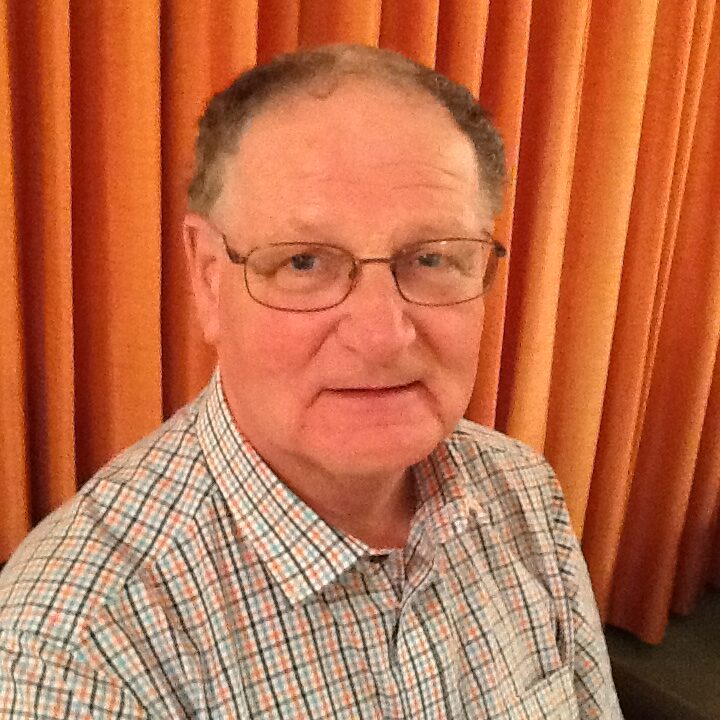
John Vaughan – went along to an evening class in 2003 and discovered he liked Poetry. It was so different to his school days when Alexander Pope was regarded as a modern poet. Eventually he ran out of adult education classes to attend. After retirement he took a degree in creative writing at the then Norwich School of Art and Design. He has published three pamphlets, writes for fun and enjoys poetry workshops. He is married, has three stepchildren and seven grandchildren. He reads the rugby sports pages in newspapers.
Commended Poems:
Mike Pullman:
News from the Frontline
We’ve just beaten Barry Town in the cup and Gagsy’s buzzing,
back in the hospitality portacabin where the roof leaks
but they’ve put fridge in anyway and a big TV
and the football results are on and there’s Gagsy
on his fifth Doombar already
and his head’s gone like Gascoigne’s in that semi.
Now it’s half past five and it’s the news
and here’s the Home Secretary talking
about the small boats that keep coming, and we know what’s coming.
Gagsy stands up splits open……. fuckin immigrants…send the fuckers back…
And the boys are all laughing cos he’s just being Gagsy.
And you’re just back for the weekend from uni.
And away in a village somewhere in the Hindu Kush
Khalid wraps a Man United shirt around his sliced-open thigh;
his daughter’s like a stone under the mashed TV.
He screams but hears nothing cos he’s deaf from the blast
from the hit from the drone launched
fire-and-forget missile. And he remembers Afzal
who only wanted ten thousand. And he crawls to his daughter,
but she’s gone; her book blown across the room her phone
ringing somewhere next door. And his tears can’t even fall
but settle to mud in the dust on his cheek. And the pain in his leg
rips up through his spine. And the sun flows into the silent room
bringing to life the death.
And back here Gagsy is shattering the portacabin walls with
…. ragheads…robbing bastards…terrorists…rapists….
then gets another Doombar and its only six thirty.
And the boys are all still laughing cos he’s just being Gagsy.
And you’re just back for the weekend from uni
Victoria Richards:
In the newsroom
In the newsroom, the editor tells me not to use the ‘G’ word
– for genocide, for Gaza –
because (whisper it) it’s too violent. “Just use… ‘mass deaths’.”
In the newsroom, a man with rollercoaster eyes is sentenced to life in a strip-lit cell
for something so terrible that a mother rips herself open on TV. She weeps into
the gaping mouths of the paparazzi, face lit by headlights, moments before a crash.
In the newsroom, I write a message to someone in charge to tell him a headline hurts me.
That describing a woman’s death like you would a recipe
– Pureed in Blender by Husband– is too-much-help-I’m-drowning…
…only to be told it’s “an accurate way to describe a horrific event”.
In the newsroom, I watch Sky as a woman in France faces the men who raped her
for years while she lay comatose: unknowing, unknown.
And the line (of husbands, sons, neighbours)winds out of court, halfway down the street.
In the newsroom, I write the words Olympian and athlete and petrol and ex-boyfriend.
I type Trump and Supreme Court and ‘find and replace’ abortion with woman dead.
I draft Afghanistan and women’s voices and then strike through. Redacted.
In the newsroom, I shout words like BREAKING and LIVE BLOG
and HARRY AND MEGHAN and TRUMP and NETANYAHU and 70,000 DEAD
and rising and tap-tap-tap my keyboard as I, too, am buried in rubble.
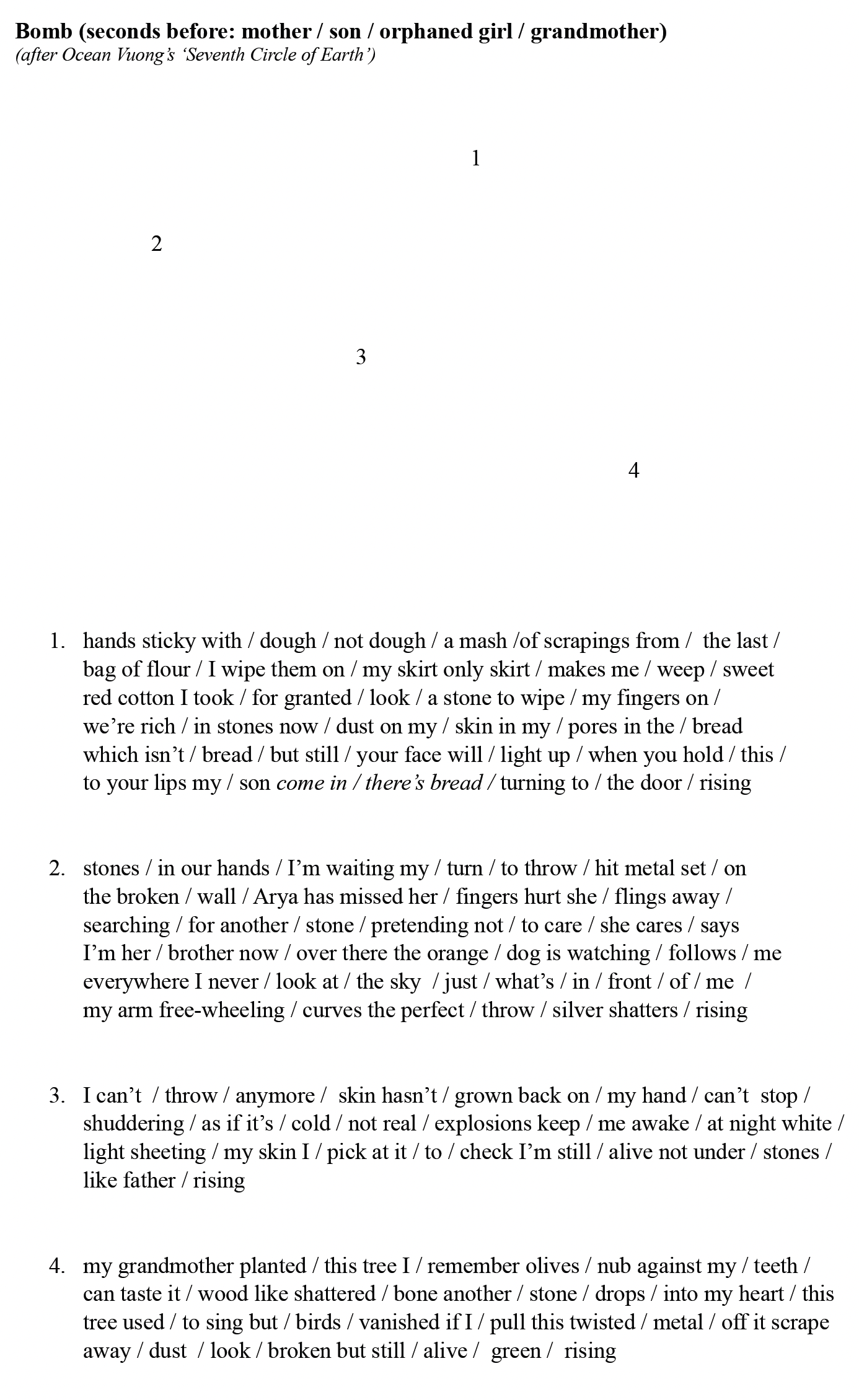
Sue Proffitt:
Honourable Mentions
Zuihitsu on death and diamonds – Mary Mulholland
Watching the news on the last day of November 1995 – Helen McSherry
Waiting for the Incredible Hulk – Christopher Horton
The importance of washing machine – Rachael Clyne
Vivat Regina – Peter Daniels
Possession of controlled rugs – Harry Bayman
Invitation to a lost Cat – Mary Barnes
The Four Tops at Streatham odeon – Robin Kidson
The night won’t end – Saemah Mashtaq
A navaho chief rides by – Judith Drazin
Judge’s Report
Café Writers 2025 Judges Report
Jessica Mookherjee
Judging this competition felt, at times, like standing briefly inside a great chorus. Thank you to every poet who sent work — I know what it costs to send a poem out into the world. It is never a small act.
Reading over a thousand poems gave me a strange and moving sense of the collective mind of poets writing now. So many of you are writing into the pressure of this moment — climate anxiety, war, political fracture, illness, grief, motherhood, endings and beginnings. Again and again I felt I was reading poems written by people trying not just to describe the world, but to find a way to live inside it.
One of the things I noticed early on was that scale and success are not always the same thing. Some poems reached for enormous subjects but couldn’t quite contain them. Others, quieter in scope, achieved exactly what they set out to do — and did so with clarity, confidence and care. Those were often the poems I found myself returning to.
By the time I reached the final rounds, I was looking for poems where craft, language and intention felt inseparable — poems that felt inevitable, as if they could only exist in the form they had found.
The winning poem, ‘King Priam of Kharkiv’, is written with remarkable restraint and humanity. It places myth beside the ordinary and allows love, grief and courage to exist without spectacle. The poem trusts its reader. It stayed with me long after I finished reading.
The second-placed poem, ‘Essay on the Snail’, is strange, elegant and quietly unsettling. I admired its intelligence, its tonal control, and its willingness to take an unusual idea seriously and follow it all the way through. The final line is extraordinary — both ironic, devastating and profound. I also very much like snails.
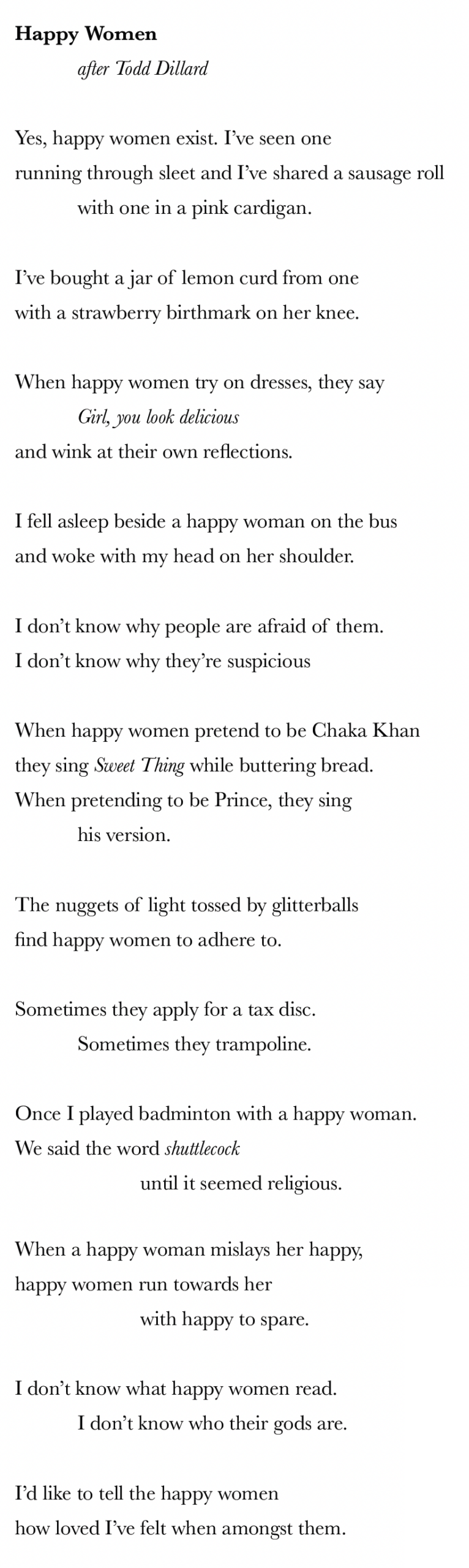
The third-placed poem, ‘Happy Women’, feels generous in a way that is rarer than we might admit. It allows joy to be complex, communal and embodied. It is playful, warm and precise, and it left me feeling unexpectedly moved. I very much hope this poem has a life of its own beyond this competition.
Among the Commended poems, ‘News from the Front Line’ stood out for the way it reveals the moral distress of contemporary life without simplifying it. ‘Bomb’ is formally bold and emotionally explosive. ‘In the Newsroom’ captures the strain placed on language itself when it is forced to carry violence, ethical injury and truth at the same time.
The Honourable Mention poems represent voices I hope continue to be heard. Many of them showed real risk-taking, curiosity about language, and a willingness to look at the world slightly sideways — which is often where poetry lives. I must mention that there were many poems about cats entered but only one kept making me cry — a little spell for a friends return. I will treasure that poem.
The Norfolk Prize winner, ‘The Party’, delighted me in its balance of humour, craft and control — a reminder that a poem can hold multiple emotional registers at once and be stronger for it.
I want to say, sincerely, that there were many poems that came very close. I am sorry not to have been able to include more. I had the urge to write to all the poets of final 150 poems and personally thank them for they all stood out. Competitions inevitably capture one reading, and I am one reader, at one moment in time. To all entrants, please keep writing. Please keep sending your work out. The range of imagination, care and attention I encountered here was extraordinary.
It is a difficult, complicated time to be alive — and perhaps exactly the right time to be writing poetry.